Practical AI for Farms — Start Small, Measure, Scale
1/22/2026
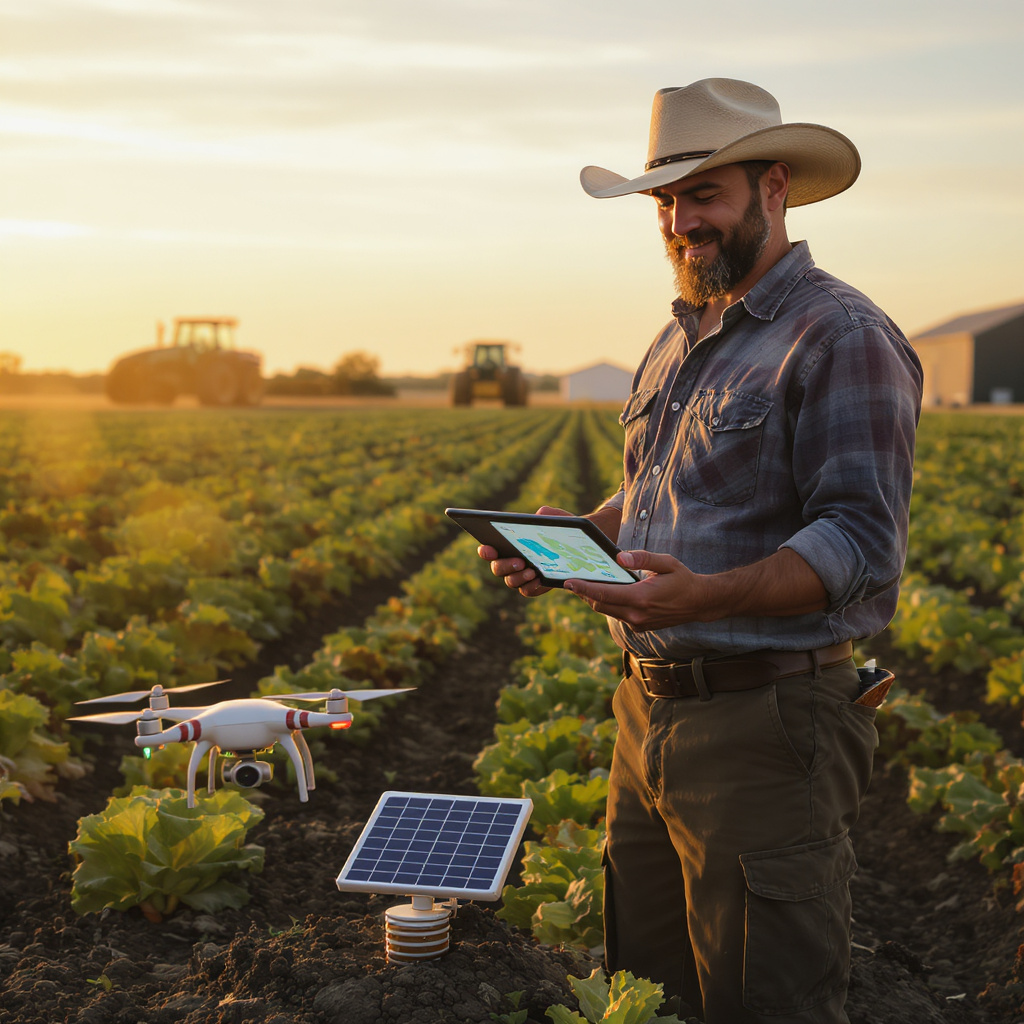
AI is a toolbox, not a product: combine imagery, sensors, models and automation to make faster, more precise farm decisions that cut inputs, protect yields and save labor. Start with one clear pilot to prove value.
Why this works
- Actionable outcomes: targeted irrigation, earlier disease alerts, variable‑rate fertiliser and routine automation translate directly to cost and time savings.
- Fast payback opportunities: simple sensor irrigation or drone scouting pilots often show measurable input reductions and labor savings quickly.
- Edge + cloud: hybrid deployments let heavy training run in the cloud while local inference (edge) keeps critical triggers fast and reliable where connectivity is limited.
Core capabilities to prioritize
- Precision irrigation: soil probes, weather and evapotranspiration models to water only where and when crops need it.
- Early disease detection: drone or fixed‑camera vision flags hotspots before visible outbreaks, enabling spot treatments and lower chemical use.
- Yield optimization: time‑series and forecast models produce variable‑rate maps, planting windows and clearer yield ranges for logistics and purchasing.
- Labor augmentation: robotics and automation handle repetitive tasks so staff focus on supervision and exceptions.
Practical deployment strategy
- Start small: pilot one field or crop with defined KPIs (percent input saved, yield per hectare, hours saved).
- Pick practical tools: choose sensor irrigation, drone scouting, or simple prediction models that integrate with existing machinery and workflows.
- Partner and integrate: select vendors with open APIs, ISOBUS/CSV/GeoTIFF support and strong onboarding.
- Train and iterate: involve agronomists and field teams, review results regularly and refine thresholds to local conditions.
Data, trust and verification
- Data hygiene: consistent labels, timestamps and geolocation improve model accuracy and repeatability.
- Privacy and consent: written agreements on access, retention and anonymization build farmer trust.
- Verify claims: ask for model cards, trial protocols, precision/recall metrics and independent or peer‑reviewed validations.
Measure success
- KPIs: percent reduction in water/fertiliser, change in yield per hectare, time saved per task.
- Validation: run matched control plots (A/B testing), predefine success thresholds and repeat across seasons for confidence.
Quick checklist & tips
- Pick one pilot and collect 2–4 weeks baseline data (sensors, imagery, manual observations).
- Define simple KPIs and success thresholds before you start.
- Choose cloud for heavy training and edge for fast, local actions.
- Insist on onboarding, operator training and SLA support from vendors.
- Treat headline vendor numbers as starting points—request methods, sample sizes and raw logs where possible.
By following this inverted‑pyramid approach—state the goal, pick pragmatic tools and measure rigorously—you turn AI from a promise into reliable, repeatable gains on the farm, one decision and one field at a time.