AI on the Factory Floor: Practical, Measurable Steps
2/14/2026
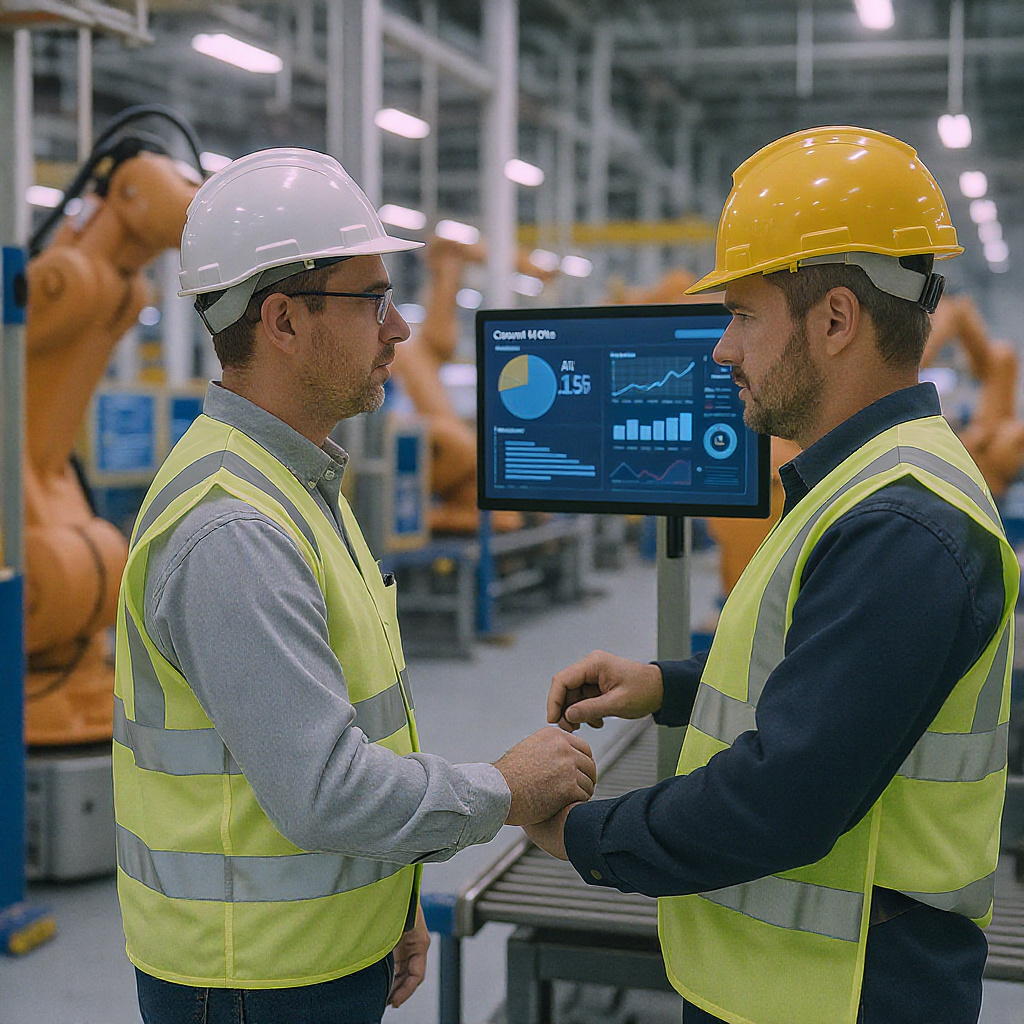
Main point: AI can deliver clear, measurable value on the factory floor—reducing downtime, improving quality, boosting throughput, and enhancing safety—when deployed as human‑centered, tightly scoped pilots that map directly to operational KPIs.
Why it matters (key benefits):
- Reduce downtime: predictive analytics surface failure signatures from vibration, temperature, and acoustics so teams plan service windows instead of fighting unplanned stops.
- Improve quality: computer vision finds defects faster and more consistently, lowering false accepts and false rejects when tuned to your lighting and part variation.
- Boost throughput: process optimization and adaptive robotics smooth bottlenecks and shave cycle time.
- Support safety: real‑time alerts and ergonomics monitoring decrease near‑misses and injuries by keeping people away from hazardous tasks.
- Augment expertise: treat models as co‑pilots that surface patterns and prioritize actions while technicians apply context and judgement.
Evidence & approach: favor independent studies, vendor case data with clear baselines, and analyst reports (for example McKinsey) when validating claims. Start with focused pilots, measure MTTR, OEE, defect rate, and throughput, and scale where human‑plus‑AI workflows prove their value.
How to get started (practical steps):
- Readiness check: inventory sensors and logs, identify labeling gaps, verify IT/OT connectivity, and map staff skills so scope is realistic.
- Pilot design: pick a single asset class or inspection point, define clear KPIs (MTTR, defect catch rate, hours saved), and limit scope to show results in weeks.
- Data & integration: standardize sensor calibration, store telemetry securely, and plan APIs/edge connectors to integrate outputs into MES/ERP/SCADA for automated actions.
- People & change: train operators on data capture and alert response, appoint an AI champion, and frame AI as assistive not replacing jobs.
- Budgeting: fund pilot setup and separate ongoing operational costs (cloud, connectivity, sensor maintenance, retraining).
Operational guards for reliability:
- Data quality & bias: automate validation, audit labels, and sample across shifts/variants; use stratified sampling and synthetic augmentation carefully.
- Cybersecurity & OT risk: segment networks, use hardened edge gateways, follow IEC 62443 and NIST cybersecurity practices, and pen‑test telemetry channels.
- Explainability: prefer interpretable models for safety decisions or provide local explanations (feature contributions, confidence bands) for complex models.
- Scaling & MLOps: monitor performance/latency/drift, version datasets/models, use canary deploys, and automate retraining triggers and rollback paths.
- Compliance: map regulatory requirements early (NIST AI RMF, ISO/IEC, GDPR/CCPA, local safety rules) and keep audit trails.
Measuring impact (KPIs & cadence): focus on a short set of primary KPIs—OEE, MTBF, MTTR, defect rate, throughput, safety incidents—and secondary KPIs like maintenance cost/hour and energy/unit. Collect 3–6 months of baseline data, publish transparent dashboards with notes on anomalies, and assign ownership for definitions, data quality, and review cadences (daily for alerts, weekly for MTTR trends, monthly for OEE).
Quick wins & examples: three small pilots with fast ROI: a single‑sensor predictive pilot on a high‑value motor; an inline vision check at a known bottleneck; or digitizing a paper maintenance log to make work orders analytics‑ready. These reduce friction and build repeatable patterns.
Validating claims & evidence checklist: demand source, sample size, baseline period, measurement window, and independent verification. Prefer peer‑reviewed journals, neutral testbeds, and reputable analyst reports for technical and scale context.
Bottom line (summary and next steps): sequence readiness checks, run narrow measurable pilots, invest in pragmatic data plumbing and governance, integrate outputs into existing systems, and prepare people with short hands‑on training. Small, verifiable wins build trust and let AI reliably amplify human expertise on the shop floor.