AI for Retail: Practical Wins — What, Why, How, What If
11/1/2026
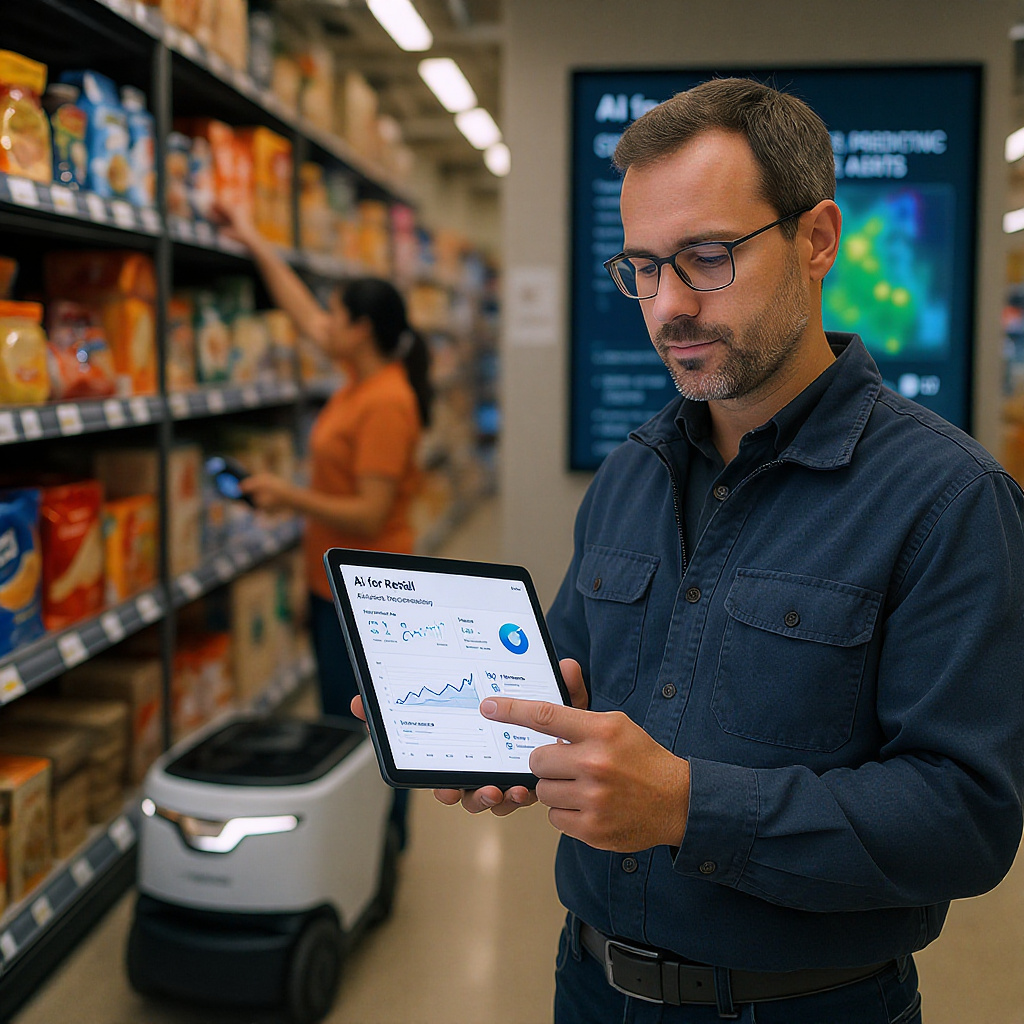
What: Practical AI applications for retail — personalized recommendations, demand forecasting and inventory optimization, checkout automation and conversational support. Outputs include probabilistic demand forecasts, reorder suggestions, product-ranking scores, churn risk and fraud flags.
Why: These tools reduce stockouts and excess inventory, lift conversion and basket size, shorten checkout times, and free staff for higher‑value tasks. Measurable gains are realistic: many pilots show single‑digit to low‑double‑digit improvements in sales or turnover and noticeable forecast accuracy gains.
How:
- Start with data readiness: POS, inventory, returns, promotions, timestamps and reliable IDs.
- Pick a focused pilot (8–12 weeks): e.g., replenishment for 50 fast movers or a 12‑week personalized email test.
- Define KPIs: conversion, AOV, SKU fill rate, days‑of‑inventory, checkout completion.
- Run controlled experiments (A/B tests), shadow mode and validate sample sizes.
- Integrate with POS/CRM/ERP via APIs or middleware; automate high‑value workflows once validated.
- Governance: monitor data health, track model drift, enable overrides, run privacy checks (GDPR/CCPA), and log decisions for explainability.
What If (risks & next steps):
- Upfront work: data cleanup and system integration require time and investment.
- Operational change: teams must adapt; appoint local champions and train staff in shadow mode.
- Privacy and bias: run cohort audits, pseudonymize data, and include contractual data controls with vendors.
- If you don’t act: competitors may capture margin and customer experience gains; if you go further: scale by automating reorder triggers, real‑time ranking and campaign orchestration while maintaining monitoring and retraining cadence.
Practical checklist: baseline metrics, defined deltas, dollarized ROI math, verified vendor case studies, control‑group evidence, and clear SLAs. Start small, measure fast, iterate and scale what works.